
Key Takeaways
FBO stands for Fixed-Base Operator: a business that provides a private jet terminal and all the ground services associated with it, used instead of the main airline terminal. At an FBO, check-in, security, lounges, and boarding are handled privately, while the aircraft is refuelled, cleaned, inspected, and prepared for its next departure behind the scenes. “Private jet terminal” describes the passenger-facing building; “FBO” describes the whole operation, including the ground team and the airport licence. When choosing FBO services, independent IS-BAH certification, network coverage, 24/7 availability, and a verified track record should carry the most weight. MJets is the only Thai operator to hold dual IS-BAO and IS-BAH certification and has been named Asia’s Best FBO for 10 consecutive years.
What does the FBO stand for? FBO stands for Fixed-Base Operator. In the FBO aviation industry, it is a commercial business authorized to provide ground handling, passenger services, and aircraft support at an airport. In private aviation, FBOs serve as dedicated terminals and operational hubs that streamline every stage of a private flight.
What is an FBO?
For anyone who arranges private travel across Asia, the FBO is where the journey really begins. It is the private side of the airport, and the quality of the FBO services used shapes the whole experience, from the moment a car reaches the gate to the moment the aircraft lifts off. The advantage of an FBO is most felt when it is handled by an established operator, and MJets, named Asia’s Best FBO for 10 consecutive years and the only Thai operator to hold both IS-BAO and IS-BAH certifications, is one of the region’s most trusted names.
What is an FBO at an Airport?
An FBO at an airport is a completely private alternative to the commercial terminal. Passengers on private jets do not use the main airline terminal at all; the FBO serves as the primary passenger terminal for the private aviation journey, from check-in and security through to the lounge and boarding, all handled through a separate, dedicated facility.
From a passenger’s perspective, the private jet terminal includes a dedicated arrivals and departures facility, with its own entrance, lounge, and direct access to the aircraft on the ramp. Check-in and security are handled quickly and privately, without joining airline queues, and meeting rooms, lounges, and crew rest areas are available. Ground transport is arranged directly between the vehicle and the aircraft.
Behind the scenes, an equally important set of activities takes place simultaneously.
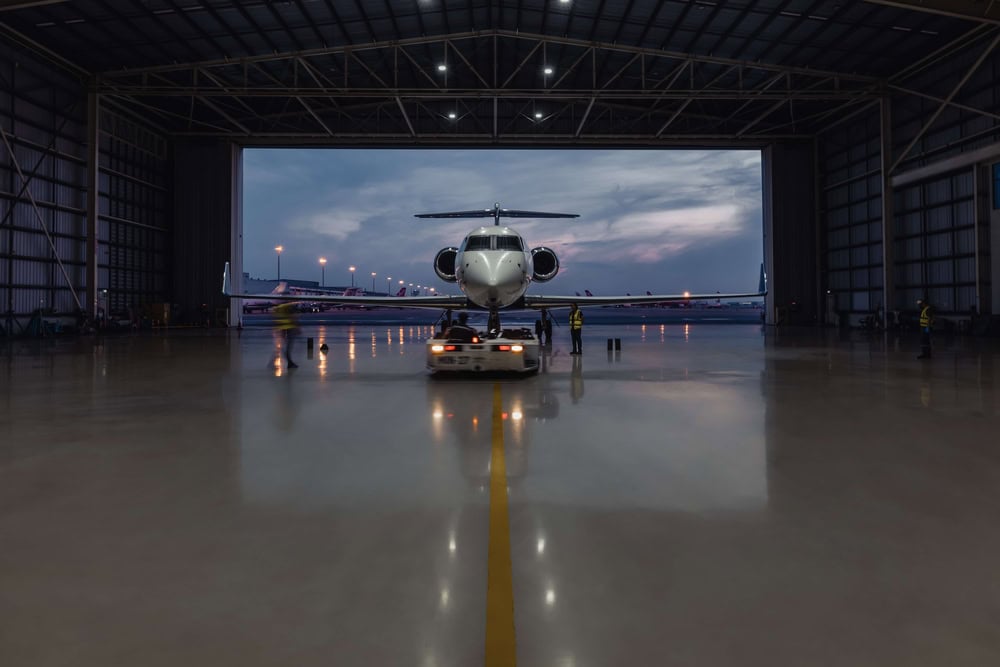
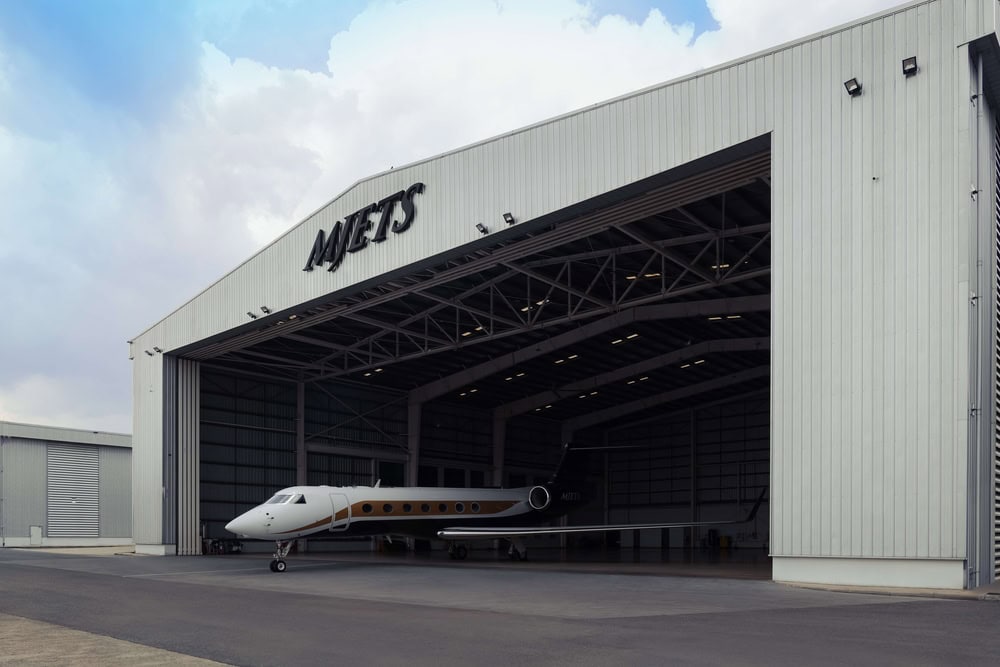
The aircraft is refuelled, inspected, and prepared for its next departure. Any required cleaning or maintenance is completed during the turnaround. Flight plans, slot permits, and customs or immigration paperwork are coordinated by the FBO’s operations team, and crew accommodation or transport is arranged where an aircraft is staying overnight. At the MJets FBO at Don Mueang International Airport in Bangkok, both roles are carried out together, with the passenger terminal and the full ground operations for the same arrival managed by a single certified team.
Is an FBO the Same as a Private Jet Terminal?
In practice, the FBO is where travellers go rather than the commercial terminal, so it serves as the private jet terminal. There is a technical distinction, however. The term “private jet terminal” refers to the passenger-facing areas, such as reception, the lounge, and departure gates. The term “FBO” describes the entire operation behind it: the ground team, the aircraft services, and the operational infrastructure of the business entity that holds the airport licence.
At MJets, the terminal experience and the aircraft handling are managed seamlessly, upholding service quality and safety standards that meet certification requirements for IS-BAH, the International Standard for Business Aircraft Handling, and IS-BAO, the International Standard for Business Aircraft Operations. MJets is the only Thai operator to hold both.
What FBO Services Actually Cover
What is an FBO, and what services does it provide? FBO services fall into three groups:
- For the aircraft, refuelling, towing, and parking, ground power, hangar space, and cabin cleaning and restocking are provided between flights.
- For passengers and crew, arrivals handling, private lounges, ground transport, crew support such as accommodation and rest facilities, and concierge coordination for hotels and reservations are arranged.
- Operationally, flight permits and landing slots are managed in coordination with the airport authorities, trip support is coordinated across every leg of an itinerary, and aircraft management services are offered to owners seeking a single point of contact for scheduling, maintenance records, and crew rostering.
All three categories are provided by MJets Don Mueang International Airport in Bangkok, with ground-handling services also provided at other airports in Thailand, namely Phuket, Samui, U-Tapao, Hua Hin, and Chiang Mai, and at Seletar Airport in Singapore. MJets also operates FBO facilities in Yangon, Myanmar, and New Delhi, India.
How to Choose an FBO in Asia
When choosing an FBO in Asia, there are four key factors to consider:
- Independent certification, such as IS-BAH, the internationally recognised standard for business aviation ground handling.
- Network coverage matters next, because a multi-port FBO means the same standards, contacts, and billing relationship at every stop on an itinerary.
- Round-the-clock availability is also essential, as private aviation does not keep commercial hours, and delays or diversions can occur at any time.
- A track record with independent verification should be sought, particularly awards decided by operator and pilot surveys.
Measured against these criteria, MJets holds dual IS-BAO and IS-BAH certifications in Thailand and IS-BAH Stage 3 at Seletar Airport in Singapore. These credentials have helped MJets earn recognition as Asia’s Best FBO Aviation for 10 consecutive years since 2016.
Booking Tips For Brokers and Travel Arrangers
For an executive assistant or logistics officer, confirming relevant details ensures a smooth handover: the aircraft type and tail number, arrival and departure times, passenger numbers, any privacy or special requirements, and whether the crew will need accommodation should all be communicated in advance. In return, the FBO should be asked whether its facility is IS-BAH certified and at what stage, whether customs and immigration are coordinated in-house, whether ground transport is included, and who the single point of contact for the trip will be.
Why Choose MJets’ FBO Services
The right FBO removes friction in your flight planning, and that is where an established operator earns its place. MJets has provided FBO and ground-handling services across Southeast Asia for many years, holds major international safety certifications, and runs its terminals and ground operations as a coordinated service. For operators and owners who want consistency and reliability built into their network, an FBO operations partnership can be arranged across the full MJets network.
Looking for reliable FBO aviation services in Southeast Asia? Whether you need ground handling, passenger support, trip coordination, or a long-term FBO operations partnership, the MJets team can help streamline your operations across the region.
References:
- What Is FBO in Aviation? Retrieved on 21 October 2026 from https://www.flyingmag.com/what-is-fbo-in-aviation/
Frequently Asked Questions About FBO Meaning and Services
Q: What is an FBO, and what services does it provide?
A: An FBO is a private airport facility and business used instead of the commercial terminal. It provides aircraft services such as refuelling, parking, and cleaning; passenger and crew services such as private lounges, arrivals handling, and ground transport; and operational coordination such as flight permits, landing slots, and trip support.
Q: What does FBO stand for?
A: FBO stands for Fixed-Base Operator. The term dates from the period after the United States Air Commerce Act of 1926, when aviation businesses established permanent, fixed bases at airports rather than moving from field to field.
Q: What is the FBO at an airport?
A: It is the private alternative to the main terminal. Check-in, security, lounges, and boarding are handled privately there, while the aircraft is refuelled, inspected, and prepared, and the necessary permits and paperwork are coordinated behind the scenes.
Q: Is an FBO the same as a private jet terminal?
A: Broadly, yes: the FBO is used instead of the commercial terminal and serves as the private jet terminal. Strictly, “private jet terminal” refers to the passenger-facing building, while “FBO” refers to the whole operation behind it, including the ground team and the airport licence.
Q: Why should MJets be chosen as an FBO in Asia?
A: MJets has been named Asia’s Best FBO by Aviation International News for 10 consecutive years and is the only Thai operator to hold both IS-BAO and IS-BAH certification. FBO and ground-handling services are provided 24/7 across six airports in Thailand and at Seletar Airport in Singapore, as well as FBO facilities in Yangon, Myanmar, and New Delhi, India. Terminal experience and aircraft handling are managed by the same certified team, ensuring a consistent standard across the network.